
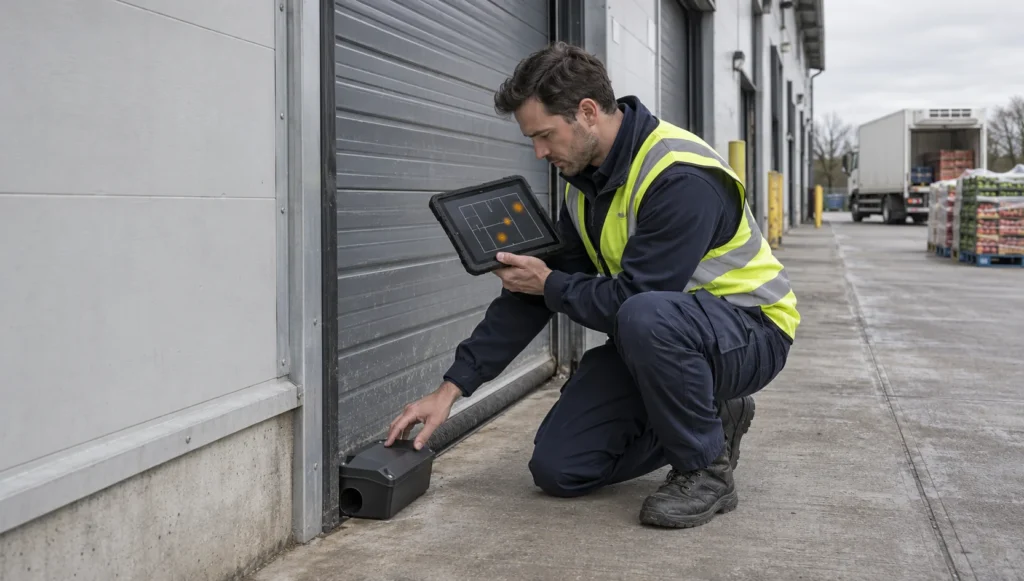
Predictive Pest Control Software for Busy Operators
Running a pest control business across the UK means fighting fewer fires, not more. Predictive pest control software turns historical visit records into forward-looking operational intelligence. Service managers can see where biological pressure is building before it reaches a food factory floor or a hotel kitchen. Contracted visit frequency holds, technician routes stay intact, and audited sites stay audit-ready.
Every service manager knows what a surprise infestation costs. Emergency attendances swallow technician hours and derail the week’s routes. Client trust suffers when an environmental health officer or certification auditor finds unmanaged activity. So can planned data analysis genuinely stop routine visits turning into expensive emergency treatments?
Key Takeaways
- Predictive analytics turns historical monitoring data into planned preventive work, cutting emergency attendances across contracted commercial premises.
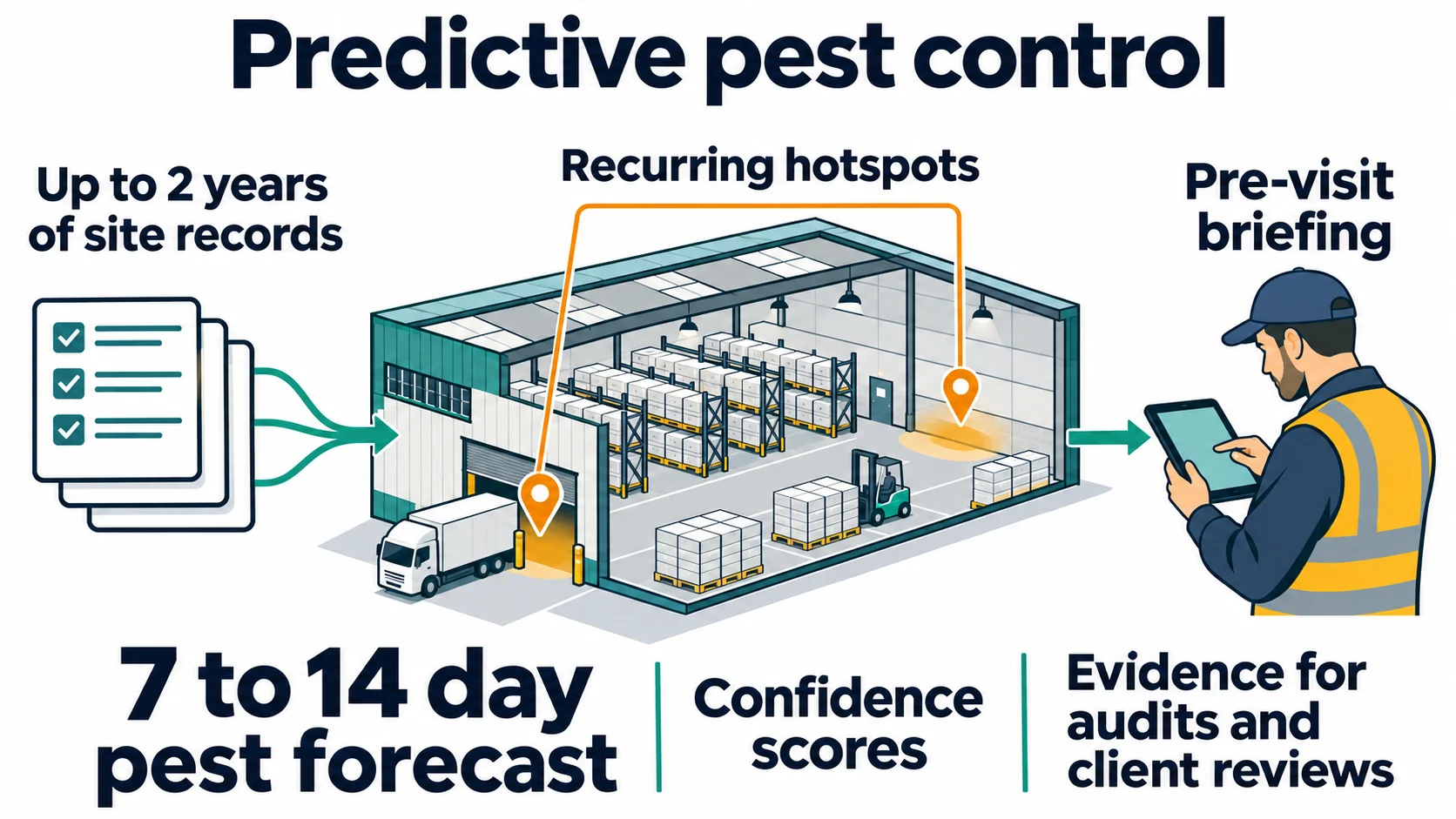
- PureanX AI reviews up to two years of inspection records to expose recurring hotspots and the environmental causes behind them.
- The engine produces a 7 to 14 day pest forecast for every active property, with a confidence score attached.
- Forward-looking risk projections strengthen client reviews and provide objective evidence for BRCGS, SALSA and local authority inspections.
- Automated visit analysis comes as standard, so technicians arrive holding a structured briefing rather than a blank inspection sheet.
Reactive Service Delivery Against Predictive Pest Management
Most UK pest control contracts still run on a reactive rhythm. The technician checks monitors, records activity, and treats after a sighting. Predictive working reverses that order. The software analyses biological lifecycles, seasonal trends and historical catch logs first, so the team schedules interventions before populations expand.
Four measures expose the difference. Technician hours, infestation control, audit evidence and contract conversations all behave differently under each model. The table below sets out both approaches side by side. Service managers can then judge which column matches the reality of their current contract performance.
| Operational Dimension | Reactive Service Delivery | Predictive Pest Management |
|---|---|---|
| Operational DimensionResource Allocation | Reactive Service DeliveryEmergency call-outs displace planned contract schedules | Predictive Pest ManagementTargeted visits concentrate on identified high-risk zones |
| Operational DimensionInfestation Control | Reactive Service DeliveryTreatment starts after damage or sightings occur | Predictive Pest ManagementProofing and hygiene work prevents ingress |
| Operational DimensionAudit Compliance | Reactive Service DeliveryRecords show catch history without forward risk analysis | Predictive Pest ManagementDocumented root cause analysis satisfies BRCGS and SALSA auditors |
| Operational DimensionContract Retention | Reactive Service DeliveryReviews focus on service disputes and emergency costs | Predictive Pest ManagementEvidence-based reviews show measurable risk reduction |
Core Capabilities of Predictive Pest Control Software
Automated Site Data Synthesis Across Multi-Year Histories
Predictive pest control software reads a site’s full service history before the technician arrives. The system pulls catch counts, device statuses and open recommendations from up to two years of records. It then surfaces the seasonal patterns and repeat pressures that a manual file review rarely catches on a busy round.
In practice, we find that relief technicians suffer most from thin site knowledge. Automated synthesis closes that gap. The platform summarises activity across bait points, insect light traps and pheromone monitors in one place. Nobody needs to read a folder of legacy paper reports before stepping onto an audited floor.
Hotspot Detection and Area Risk Profiling
Device-level analysis pinpoints the departments, wall junctions and loading bays carrying elevated risk. The software ranks these areas rather than treating a site as one uniform space. Supervisors can then assign specialist skills, extend inspection time, or add monitoring density where the evidence actually justifies the cost.
Raw material intake, waste compounds and external yards earn intensive physical examination. Stable office areas consume less time. This targeted deployment protects the sensitive zones without inflating the visit length. It also gives the account manager a defensible reason for the inspection pattern recorded on every report.
Did You Know?
Pest activity can trigger a statutory duty on your client, not only a service call. Section 3 of the Prevention of Damage by Pests Act 1949 places a duty on the occupier of land. They must notify the local authority in writing. The duty applies forthwith, once the occupier knows that rats or mice are present in substantial numbers. Agricultural land is excluded.
Pest Forecasting Software and Environmental Modelling
Machine Learning Models Applied to Environmental Variables
Pest forecasting software weighs local weather, seasonal temperature shifts and building vulnerabilities alongside historical captures. The models then estimate how external conditions drive rodent and insect pressure at a specific address. Autumn cooling, prolonged rainfall and nearby groundworks all change the risk profile of the same premises.
Biology makes these patterns predictable. House mice move indoors as external temperatures fall. Queen wasps emerge once spring temperatures reach roughly 10 degrees Celsius. Stored product insects accelerate in warm, undisturbed voids. Mapping those triggers against a building lets managers plan proofing weeks before the seasonal peak.
Probability Metrics and Forecast Confidence Scores
Forecasts arrive as probabilities, not promises. Each projection carries a confidence score drawn from data completeness, device density and recording consistency at that site. A thinly monitored warehouse produces a weaker signal than a fully instrumented production hall. The score states that limitation plainly.
Transparency matters when money follows the forecast. A high-confidence rodent alert justifies immediate proofing works or extra monitoring to the client. A low-confidence alert justifies closer inspection first. Technicians and operations managers can therefore act in proportion to the evidence rather than to the loudest warning.
AI Pest Control Analytics
Identify trends, predict risks, for smarter decisions with data-driven insights.
Pest Control Job Scheduling
Manage routine visits, call-outs, and follow-ups from one central calendar.
Analytics & Audit Reports
Turn data into clear trend graphs and detailed audit-ready summaries.
Map & Heat Map Creation
Visualise pest activity on site plans and generate professional heat maps for clients.
Mobile App for Technicians
Enable field teams to record, report, and sync jobs directly from their mobile devices.
Pest Control Recommendations
Log, assign, and close non-conformities with full client collaboration.
QR Code Pest Monitoring
Track pest activity instantly with unique QR codes linked to live site data.
Pest Control Reporting
Generate branded, audit-ready visit reports complete with images and signatures.
PureanX AI Visit Analysis in Operational Practice
Pre-Visit Risk Scoring and Automated Hotspot Alerts
The PureanX AI visit analysis engine scores premises risk before the technician leaves the van. It weighs recent activity, open recommendations and unresolved structural defects. The briefing then names the monitoring points that have shown repeat activity. The operative starts work at the right end of the building.
Consistency is the real gain here. Service quality no longer depends on which technician holds the site knowledge. A relief operative opens the mobile app and sees the same priority list as the account technician. Open defects, priority devices and the current risk level appear before any work begins.
The 7 to 14 Day Pest Forecast in Field Use
Every active property receives a 7 to 14 day pest forecast. This short projection flags the biological pressures building at that address. The field team gains an objective window for preventive work. Nobody waits for a catch to confirm what the data already suggested a fortnight earlier.
The forecast changes what happens on the day. A rodent warning sends the technician into high-risk voids, roof spaces and external perimeters. An insect warning prompts lure replacement and a check on door seals and air curtains. Proofing recommendations can be raised whilst the window is still open.
Try Insectram Free
Root Cause Analysis and Rodenticide Stewardship
Environmental Ingress Against Internal Harbourage
Repeat catches have two very different causes. The analytics compare trap distribution, catch locations and open non-conformities to separate external ingress from an established internal population. That distinction decides the treatment. Adding more bait to a harbourage problem wastes product and leaves the breeding site untouched.
From experience across the sector, the evidence usually points at the fabric of the building. Catches clustered along one external wall suggest a defect, not a population. The software highlights damaged door seals, worn brush strips and unsealed pipe penetrations as likely root causes. That moves the conversation towards physical exclusion.
Proofing-First Decisions Under the CRRU Code
The CRRU UK Code of Best Practice is explicit. Rodenticides must not substitute for proofing, hygiene and habitat management, and permanent baiting requires specific justification. Predictive analysis supports that position. It names the structural failure behind each catch, which keeps the treatment plan defensible under stewardship scrutiny.
Environmental risk assessments sit at the centre of compliant rodent work. The platform prompts the technician to record the assessment before any professional rodenticide is deployed. Non-target species, children, pets and water courses are considered on site and logged. The record then stands up to audit and client challenge.
Book a Demo
Technician Action Plans and Field Execution
Structured Daily Action Plans on Site
Analysis only earns its keep when it reaches the technician’s working day. The system converts each insight into a sequenced action plan. Priority devices, structural gaps to measure and areas needing a fresh risk assessment appear in order. The operative then works through the site in a deliberate sequence.
A plan also protects the paperwork. The mobile interface prompts the dynamic risk assessment, the species-specific findings and the recommended corrective actions in turn. Nothing critical is left to memory at the end of a long round. Standards hold steady across the whole workforce, not only among senior technicians.
Mobile Capture, Risk Assessments and Offline Working
Field data has to be captured where the activity is found. Technicians record device readings, species, quantities and photographs at the point of inspection. Signal blackspots are common in basements, chillers and steel-clad units, so offline capture matters. Records sync once the device reconnects, with no retyping at the office.
Clean capture at source is what makes the forecast reliable. Every reading feeds the same analytical engine that produces the next risk score. Gaps in the record weaken the model and lower the confidence attached to future alerts. Accurate field discipline therefore improves the prediction, visit after visit.
Audit Evidence and Commercial Client Reviews
Third-Party Food Safety Standards and EHO Inspections
Audited food businesses must show a preventive pest programme supported by documented analysis. Clause 4.14.11 of BRCGS Food Safety Issue 9 requires trend analysis of trapping and monitoring results. The purpose is to identify problem areas. The analysis must then drive improvement to the pest management procedures.
Predictive output gives an auditor something concrete to examine. Heat maps, trend charts and closed recommendations show that risk is analysed rather than simply recorded. During a local authority inspection, linked evidence carries real weight. Identified trends, documented proofing advice and completed works support the operator’s due diligence position.
Quarterly Contract Reviews and Renewal Discussions
Contract reviews improve when the data does the talking. Forecasts, closed recommendations and area risk trends replace vague verbal summaries of the past quarter. The client sees which hazards were controlled and which structural problems remain open. The discussion then moves from service complaints to shared priorities.
Price pressure is a commercial reality in UK pest control. Evidence answers it better than persuasion. A twelve-month record of controlled hazards and prevented contamination justifies the visit frequency on the specification. It also makes the client more willing to fund the proofing works that reduce long-term risk.
Platform Architecture and Software Selection
Native Systems Against Fragmented Integrations
Scheduling, mobile reporting, customer records and predictive analysis belong in one architecture. Middleware connectors between separate systems introduce sync delays, broken endpoints and inconsistent records. The analytical engine then works from an incomplete history, which weakens every forecast it produces for the operations team.
A unified platform moves a job cleanly from enquiry to invoice. The booking reaches the office calendar, the technician’s app, the analytical engine and the accounts ledger without duplicate entry. Administrative time falls. More importantly, the prediction runs on complete operational data rather than a partial copy of it.
BPCA Endorsement and Professional Standards
Software selection is a compliance decision as much as a commercial one. Pest control software endorsed by the British Pest Control Association reflects accepted UK workflows, qualification expectations and stewardship obligations. That alignment matters when an auditor examines how your technicians record decisions in the field.
When operating in this area, three features separate professional platforms from generic job management tools. Compliance checks must be mandatory, not optional. Offline capture must work in signal blackspots. Client reporting must be clear enough for a facilities manager to act on without a follow-up phone call.

“We regularly hear from smaller pest control companies who know they need to start their digital journey but aren’t sure where to begin. At the same time, larger businesses often come to us looking to refine or improve the systems they already have in place. This new member benefit from long-standing BPCA member and supporter Insectram offers something genuinely useful for everyone. If you’re even a little bit curious about improving how you work, I’d encourage you to give them a call and explore what’s possible.”
Final Thoughts
Reactive extermination and modern integrated pest management are different disciplines. Predictive pest control software supports the second one. Multi-year visit histories, identified root causes and practical 7 to 14 day forecasts change how a round is planned. Quality then holds steady across every site. Emergency call-outs fall, and margins hold.
Scrutiny of rodenticide use is tightening, and audit standards now expect documented preventive evidence. Field teams need tools that match that expectation. Operators who move from historical record keeping to predictive operational intelligence protect public health, defend their margins, and build client relationships that survive a difficult inspection.
Enquire About Insectram
Frequently Asked Questions
A:
Predictive pest control software analyses historical visit records, monitoring device data and environmental variables to forecast future pest activity. It does more than log past inspections. The analysis identifies recurring activity hotspots, points to the likely root cause of an infestation, and produces a forward-looking inspection plan for the technician. Commercial and domestic sites both benefit, although the operational gains are largest on audited premises with dense monitoring and long service histories.
A:
The forecast gives short-term visibility of the pressures building at a specific site. It draws on recent catches, seasonal emergence patterns and local weather changes. A technician can then concentrate the inspection on vulnerable entry points, move or renew non-toxic monitors, and raise proofing recommendations before an infestation establishes. The window also gives the client time to approve remedial works, which is often the slowest part of prevention.
A:
No. Digital analysis supports integrated pest management; it does not replace a competent pest controller. The British Pest Control Association treats technology as an enhancement to professional service rather than a substitute for it. Software highlights risk, ranks zones and proposes an action plan. A qualified technician still inspects the premises, verifies biological evidence, completes the dynamic risk assessment, and carries out treatment safely and lawfully.
A:
Standards such as BRCGS Food Safety Issue 9 and SALSA expect an effective preventive pest programme backed by documented trend analysis. Clause 4.14.11 of BRCGS Issue 9 requires analysis of trapping and monitoring results to identify problem areas and improve procedures. Predictive platforms aggregate twelve to twenty-four months of device data into trend reports, heat maps and corrective action logs, which gives auditors and environmental health officers something verifiable to review.
A:
In a native platform, yes. PureanX AI visit analysis, automated hotspot identification, root cause analysis and pre-visit technician briefings are included as standard features rather than paid add-ons. Because the processing happens inside the core platform, forecasts and site health metrics appear across scheduling, mobile reporting and client management without third-party integrations. That matters operationally, since bolt-on analytics tools tend to work from incomplete or delayed data.
About the Author
Craig Peniket
Craig Peniket brings over 30 years of hands-on pest control experience, specialising in high-compliance environments including BRCGS, SALSA, and major supermarket-audited facilities. His career has focused on integrated pest management within regulated food production and commercial environments where strict compliance, reporting, and audit readiness are essential.
He holds an RSPH Level 2 qualification alongside advanced credentials in Food Safety for Manufacturing, giving him a unique perspective on the intersection of biological control, regulatory compliance, and modern digital pest management technology used across professional pest control operations.